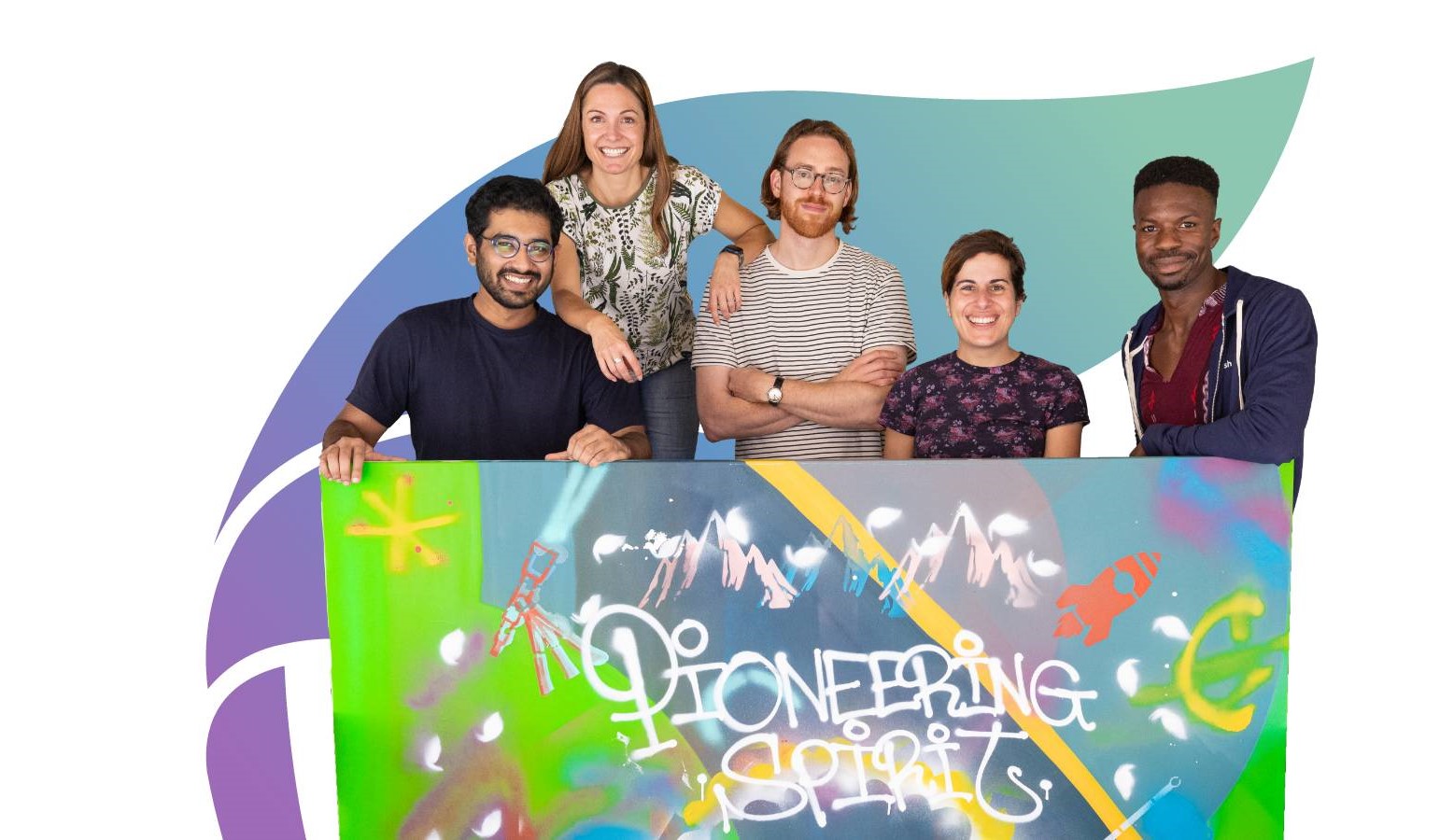
We’re looking for a creative, experienced data engineer based in London to join our fintech startup at the ground floor. If you’re excited about independence, impact, and contributing to the battle against scams and financial crime, read on to learn more ⬇️
About the role 🎭
Banks approve or reject payments with almost no context. We're building the intelligence layer that changes that — running real-time investigations on payments before they clear. You'll be our first data engineering hire, responsible for turning the rich but fragmented data we generate — payment information, payment context, and linked fraud outcomes — into a well-structured, governed, and queryable data platform. This data is becoming a product asset, not just an operational by-product, and you'll shape how it compounds into a strategic advantage for our customers.
What you’ll work on
Design and build the data platform around our proprietary fraud and payment dataset — defining how data is modelled, where it lives, and how it flows between systemsConsolidate and rationalise a mixed data estate spanning BigQuery, AlloyDB, Firestore, Elastic, PostHog, and a range of real-time API and scraped sources into a coherent and scalable architectureBuild and maintain reliable, observable data pipelines that transform raw investigation data (both structured and unstructured) into forms suitable for analytics, feature engineering, and commercial data products, where outputs can be traced back to source evidence.Mature our data governance, security, and usage controls around highly sensitive financial data — lineage, access control, PII handling, and auditabilityExplore and build graph-oriented or relationship-based views of the data to surface the network patterns inherent in fraudCollaborate with ML engineers and product to close feedback loops: ensuring fraud labels, outcomes, and enrichment data flow back into the systems that need themShip reliable code with strong emphasis on security and observabilityAI: yes, experimentation, endlessly. Experiment with and deploy specialised AI agents — and build the retrieval, grounding, and data plumbing needed to make LLM-powered investigation flows reliable in production, not just impressive in demos.Design retrieval pipelines for LLM-powered workflows: ingestion, chunking, metadata enrichment, indexing, retrieval, provenance, and evaluation.Team: Understand our customers to drive the right planning and prioritisation, and engage in effective code reviews (on both sides of the table!)This is not just a “keep the pipelines running” role: you’ll be shaping and building the foundations of how we commercialise our data assets to create value for the business and our customers.
Why this is hard
The data that makes fraud detection work is messy by nature. Labels are noisy and delayed — a payment flagged today might not be confirmed as fraud for weeks. The evidence is scattered across structured databases, unstructured documents, third-party API responses, and scraped sources, with no single schema to rule them all. You need to make this data reliably queryable for both real-time scoring and retrospective analytics, while enforcing strict governance on data that is both commercially sensitive and regulated. And you're building from scratch: there's no existing data team, no mature warehouse to inherit — just a rich, valuable, and currently underused data asset waiting for the right engineer to give it structure.
Our stack today:
Data stores: BigQuery, AlloyDB, Firestore, ElasticWorkflow orchestration: TemporalApplication monitoring: PostHogBackend: Python, KotlinInfra: Terraform, GCPWe are not overly dogmatic about tools. The right candidate will help us evolve the stack based on product and operational needs. You'll have strong opinions on what to add (dbt? a graph DB?) — and we'll expect you to make those calls and own them.
About YOU 🦄
Here are some thoughts on who would be successful in the role. We know we won’t be able to assess these from your CV, but our interview process will be designed around them:
Builder, not operator: you want to design a data platform from scratch, not slot into an existing one. You’ve done this before — or you’re itching to — and have strong opinions (weakly held) on data modelling / tooling / architecture.Product thinking: You ask “what decisions does this data need to support?” before “what schema should I use?” You care about how the data creates value, not just how it moves.Governance: You default to thinking about lineage, access control, PII, and auditability. Not because compliance tells you to, but because you’ve worked with sensitive data and you’re scared about what happens when you don’t.Collaboration: You’re direct, proactive, generous to others, and low ego. You’ll work across engineering, ML, product, and commercial teams — and need to translate across all of them.Some hard skills we’d value
Data modelling & transformation: Strong foundations with SQL and dbt (or similar transformation frameworks). You know how to model data for both analytics and downstream ML consumption. Exposure to graph databases, knowledge-graph systems, or entity-resolution problems is a strong plus.Pipeline engineering: Experience building and operating data pipelines in production. Comfortable with modern orchestrators (Airflow, Dagster, Prefect, Temporal, or similar). Bonus if you’ve worked with event-driven pipelines, CDC, or other patterns that support near-real-time data flows.Retrieval / unstructured data systems: Experience building systems around messy, unstructured, or semi-structured data. You’ve worked on search, indexing, retrieval, chunking, metadata enrichment, or similar patterns that make LLM-powered workflows reliable and auditable.Cloud data platforms: Hands-on with GCP (BigQuery, AlloyDB, Firestore) or equivalent depth with AWS/Azure and willingness to transfer.Data governance & security: Experience working with sensitive or regulated data — fintech, payments, or banking preferred. You understand data classification, access control, lineage, and compliance obligations in practice, not just in theory.Backend fluency: Solid Python skills (or other appropriate backend languages). You know that pipelines are software and can write and support that software in production.Years of experience: 6-7 or more. We're looking for professionals who can structure their own work and be a strong technical voice while getting their hands dirty (we’re not overly strict on exact number of years!).Stage of experience: We value people who have worked in early stage companies and demonstrate fluency with ongoing speed: precision tradeoffs and iterativeness.Industry: Prior experience in fintech is a plus.Not got 100% of qualifications? Research shows that women and under-represented minorities are less likely to apply for a role if they do not have 100% of the requirements. We’re paying attention to this, so please feel free to apply regardless (<2mins) or send us a note on info@tunicpay.com if you’d like to discuss if there’s a fit.
How to apply 📄
Thanks for your interest! We’ve filled this role, but if you think your skills / experience are a good match for what we’re building please check out our ‣