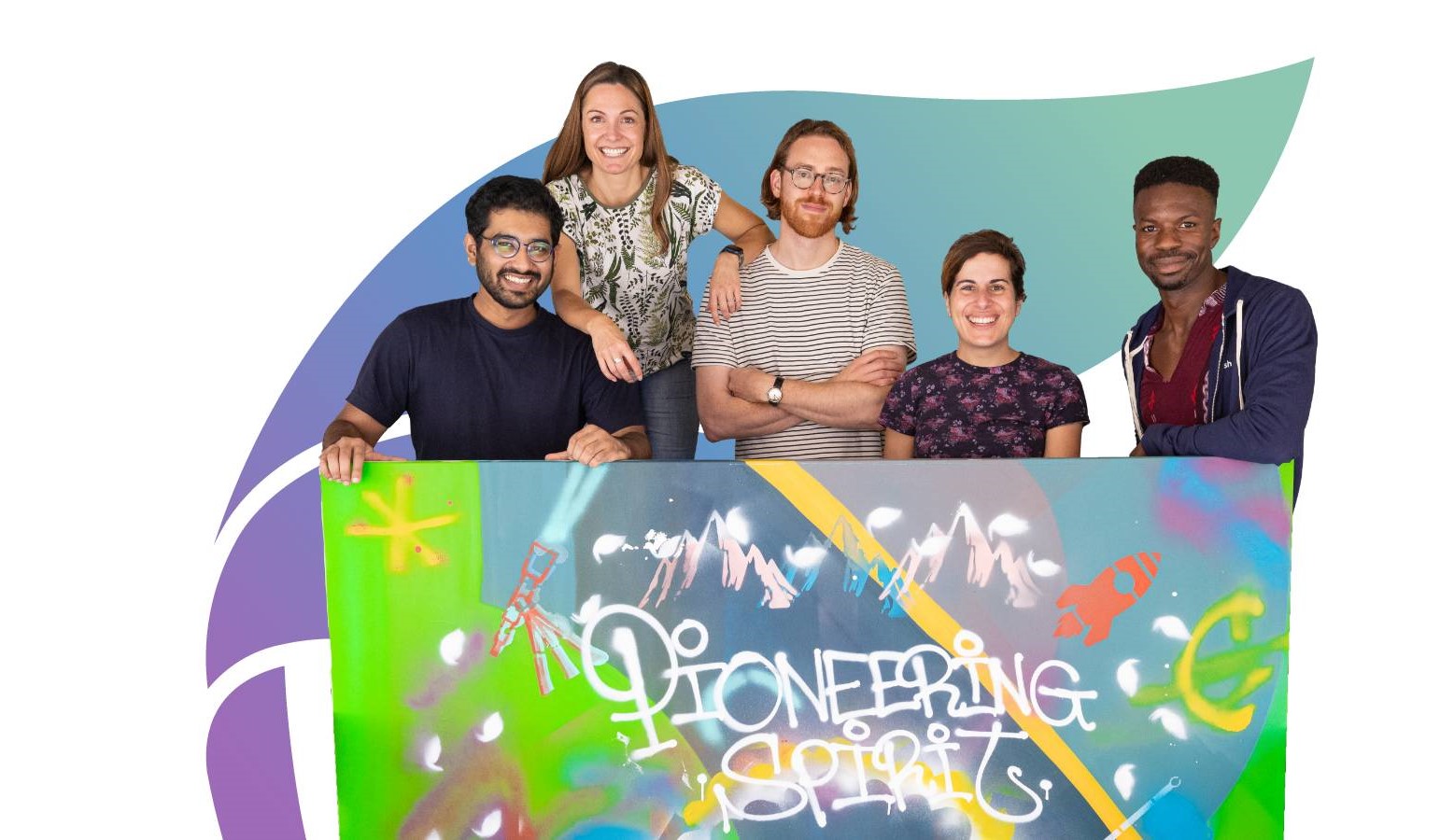
We’re looking for a creative, experienced software engineer based in London to join our fintech startup at the ground floor. If you are excited about independence, impact, and contributing to the battle against scams and financial crime, read on to learn more ⬇️
About the role 🎭
Banks approve or reject payments with almost no context. We're building the intelligence layer that changes that — running real-time investigations on payments before they clear. The technical challenge is to orchestrate multi-source evidence gathering, synthesize unstructured data with AI agents, and return a nuanced evaluation in the shortest possible time and with the greatest possible reliability.
What you’ll work on
Design and build the infrastructure for our multi-agent systems — build the platform that allows agents to operate safely and predictably, within well-defined boundariesArchitect stateful, long-running investigation workflows for failure-tolerance: retries, partial failure handling, checkpointing, etc.Build the data layer for agent reasoning: the RAG pipelines and knowledge graphs powered by heterogeneous data, with strong correctness guaranteesOwn security boundaries, ensuring that our agents are authenticated, authorized and auditableShip reliable code with strong emphasis on security and observability — both we and our customers need to understand why an agent made a decisionEvolve our AI orchestration stack — we use LangChain today but tools change; you'll make build/buy decisions and own the consequencesAI: yes, experimentation, endlessly. Experiment with and deploy specialised AI agents — we’re actively shipping LLM-powered investigation flows, not just prototyping.Team: Understand our customers to drive the right planning and prioritization, and engage in effective code reviews (on both sides of the table!)This is not a feature factory role — engineers here drive product decisions and own systems end-to-end: design, build, ship, observe, and iterate.
Why this is hard
Most AI systems fail in ways that are hard to predict and harder to debug. We're building agent infrastructure for payments — a domain where reliability isn't optional and "the model hallucinated" isn't an acceptable post-mortem. The challenge is giving agents enough autonomy to be useful while maintaining the predictability banks require. That means building structured boundaries that constrain agent behaviour, workflows that recover gracefully from partial failures, and observability that tells you what actually happened across async, multi-step executions. And we need to do this while the underlying tools and best practices are still being invented.
Our stack today:
Backend: Python, KotlinFrontend: TypeScript, ReactInfra: Cloud-native, event-driven services, async workflows (GCP managed using Terraform)Agent orchestration: LangChain, Temporal (we expect you’ll push our thinking here)Data: SQL-first, correctness > dashboardsBut honestly, if you’ve built fault-tolerant distributed systems before, the specific tools matter less than your judgement on when to reach for them.
About YOU 🦄
Here are some thoughts on who would be successful in the role. We know we won’t be able to assess these from your CV, but our interview process will be designed around them:
Product ownership: you ask “who is the user, what’s the job-to-be-done, what’s the smallest useful thing we can ship?” and you don’t wait for perfect specs and instead create solutions & communicate tradeoffs.Systems thinking: You understand how to build fault-tolerant distributed systems and have opinions on where non-deterministic components (like LLMs) should and shouldn't live in a system.Security mindset: You think about what could go wrong — especially when agents have access to sensitive data or can take actions. You design for least privilege and audit by default.Pragmatic about AI: You've shipped LLM-powered systems and know the difference between a demo and production. You're excited about what agents can do (and clear-eyed about their limitations).Collaboration: You’re direct, pro-active, generous to others, and low ego. No bug is too small if an outcome or colleague depends on it!Some hard skills we’d value
Agent infrastructure: Experience designing and shipping LLM-powered systems in production, including multi-agent architectures and orchestration frameworksWorkflow orchestration: Experience with stateful, long-running workflows — async execution, retries, partial failure handling, and observability (Temporal, Prefect, or similar)Data engineering: Building RAG pipelines and knowledge graphs over mixed structured/unstructured data. Strong SQL and data modelling skills.Security: Solid infosec foundations — you understand authn/authz patterns, secrets management, and how to build systems that handle sensitive data responsiblyYears of experience: 5 or more. We're looking for professionals who can structure their own work and be a strong technical voice while getting their hands dirty (we’re not overly strict on exact number of years!).Stage of experience: We value people who have worked in early stage companies and demonstrate fluency with ongoing speed: precision tradeoffs and iterativeness.Industry: Prior experience in fintech is a plus.Not got 100% of qualifications? Research shows that women and under-represented minorities are less likely to apply for a role if they do not have 100% of the requirements. We’re paying attention to this, so please feel free to apply regardless (<2mins) or send us a note on info@tunicpay.com if you’d like to discuss if there’s a fit.